
- Automobile Accidents
- Wrongful Death
- Premises Liability
- Our Approach
- About Us
- Blog
- Free Consulation
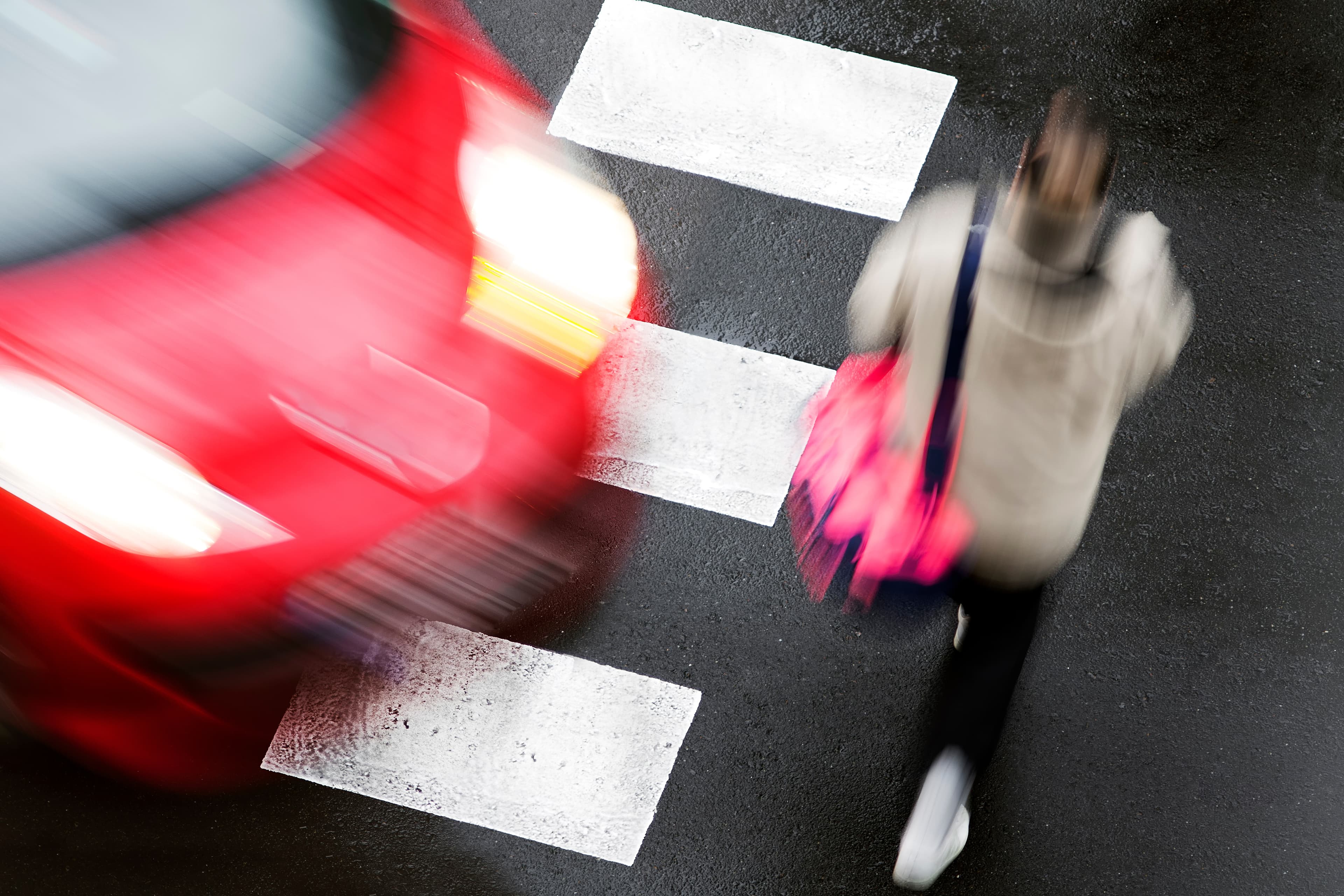
Georgia law gives pedestrians the right of way in a crosswalk and puts the duty to yield on them almost everywhere else, and that distinction decides your claim. Here is how the right-of-way statutes work, how shared fault can reduce or bar what you recover, and what to do after being hit.
If you were hit by a car while walking in Georgia, the driver is often liable, but not automatically. Georgia law gives pedestrians the right of way in some situations and places the duty to yield on pedestrians in others. Where your case falls decides whether you can recover, and how much.
Quick Takeaways
Two things happen at once: Trick-or-treating puts crowds of people, many of them small children in dark costumes, on residential streets at night. Halloween falls on a Saturday in 2026. Additionally, daylight saving time ends on Sunday, November 1, and evening commutes go dark.
The numbers are stark. A study in JAMA Pediatrics reviewed 42 years of federal crash data and found the risk of a pedestrian being killed was 43% higher on Halloween evening than on comparable evenings, peaking around 6 p.m. For children aged 4 to 8, the increase was tenfold. In Statesboro, there are also many students walking around Georgia Southern campus and downtown, plus long stretches of Bulloch County road with no sidewalk at all.
Not always. The distinction is in the traffic code.
Under O.C.G.A. § 40-6-91, a driver has to stop and remain stopped to let a pedestrian cross inside a crosswalk when the pedestrian is in the driver’s lane, or is approaching and within one lane of it. This applies to unmarked crosswalks at intersections, not only painted ones.
However, this same statute carries a limit: a pedestrian cannot suddenly leave a curb or other place of safety and step into the path of a car that is too close to stop. This provision is often argued by defense lawyers in pedestrian claims.
The duty to yield flips in this situation. O.C.G.A. § 40-6-92 requires a pedestrian crossing outside a marked or unmarked crosswalk to yield to vehicles that are already on the road, unless the pedestrian had already entered the roadway safely. Crossing outside of a crosswalk does not automatically make the collision your fault, and a speeding or distracted driver can still carry most of the blame.
This is a common rural Georgia question, and O.C.G.A. § 40-6-96 answers it in order. If there is a shoulder, walk on it, as far from the edge of the roadway as you reasonably can. If there is neither sidewalk nor shoulder, stay near the outside edge. On a two lane road, walk on the left side so that you can face oncoming traffic.
Usually yes. Georgia follows the modified comparative negligence rule under O.C.G.A. § 51-12-33. If you share some blame, your recovery is reduced by your percentage of fault. However, if you are found 50% or more at fault, your recovery is barred.
This is why a driver’s insurer will commonly argue that a pedestrian stepped out into the road suddenly, did not cross in the crosswalk, or had dark clothing on. Those arguments exist to place a percentage of blame on the pedestrian, and that percentage can decide the case.
Georgia law gives you two years from the date of the injury to bring a claim under O.C.G.A. § 9-3-33. However, waiting can cost you long before that deadline: video gets overwritten and witnesses move.
If the injured person is a child, the clock is generally paused while they are a minor, so the two year statute of limitations begins to run when they turn 18. That does not mean the whole family can wait. A parent’s own related claim can run on a different deadline, so confirm the dates that apply to your situation.
Whether a driver owed you the right of way, and how much fault an insurer can place on you, are two questions that decide a Georgia pedestrian accident claim. If you or your child was hit while walking in Statesboro or anywhere in Bulloch County, contact Sullivan Law Firm for a free consultation. We work on a contingency fee basis, so you pay nothing out of pocket, and we only get paid if you are compensated.
No. Crossing outside a crosswalk shifts the duty to yield onto the pedestrian under O.C.G.A. § 40-6-92. That does not automatically make you responsible for the crash, and a driver who was speeding or distracted can still be found mostly or entirely at fault.
Your own auto insurance policy may still help. Uninsured motorist coverage can apply to a pedestrian in some situations, which surprises most people. Have an attorney investigate your insurance policy before you write the claim off.
It depends on injury severity and whether fault is disputed. Claims are generally not settled until treatment is far enough along to know the full extent of the injury, because settling early can leave later medical costs uncovered.
We handle personal injury cases all across Georgia. Insurance companies know us and our track record, so most cases settle without having to go to court.