
- Automobile Accidents
- Wrongful Death
- Premises Liability
- Our Approach
- About Us
- Blog
- Free Consulation
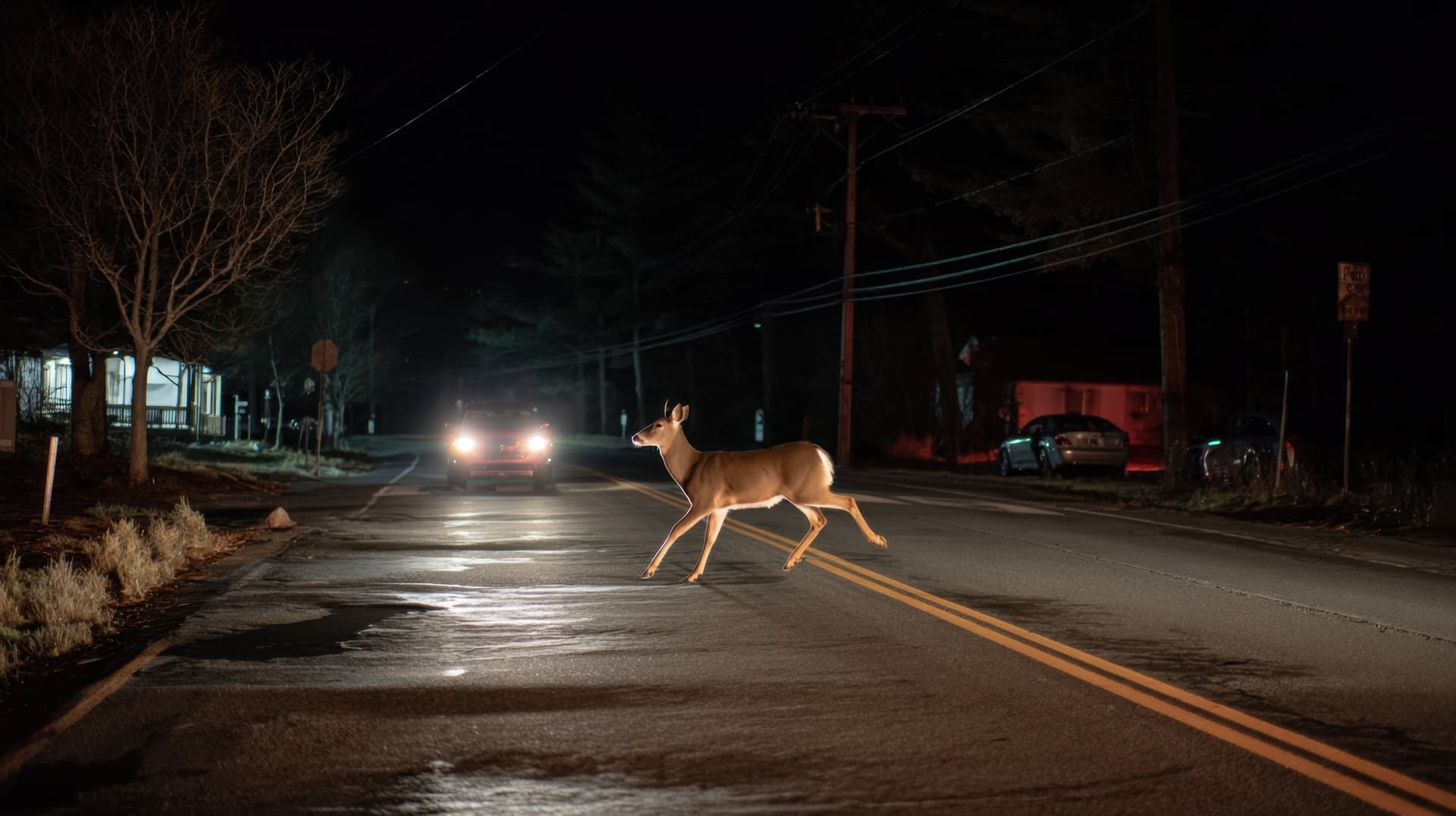
November brings Thanksgiving traffic, darker evenings and Georgia's highest-risk month for deer collisions. Here is whether insurance covers hitting a deer, whether it counts as comprehensive or collision, when Georgia law says you have to report it, and what changes if another driver caused the crash.
Thanksgiving week brings more cars onto Southeast Georgia roads, longer drives after dark, and Georgia’s highest-risk month for hitting a deer, all at the same time. Knowing what raises your risk this time of year, and what to do if the worst happens, can make a real difference, and so can talking to a car accident lawyer in Statesboro before you talk to an insurer.
Quick Takeaways
A few things stack on top of each other in late November. More families are on the road for Thanksgiving, often on unfamiliar routes and tight schedules. Daylight saving time just ended, so evening commutes and holiday drives now happen in the dark. And Georgia enters its highest-risk window of the year for deer collisions, with dusk being the most dangerous time of day for them.
Nationally, the National Safety Council estimated 439 traffic deaths over the 2025 Thanksgiving holiday period, and its analysis of NHTSA crash data found that 35 percent of Thanksgiving Day fatalities involved an alcohol-impaired driver, well above the average day. None of that is a reason to stay off the road. It is a reason to build in extra caution, especially after dark.
Usually, through your own policy. If you hit a deer on your own, with no other vehicle involved, the damage is typically handled through the comprehensive coverage on your auto insurance, not a liability claim. There is generally no other driver whose negligence caused the crash, so there is no one to bring a personal injury claim against. Is hitting a deer comprehensive or collision? In most policies it is comprehensive. Collision coverage pays when you hit another vehicle or an object, while an animal strike falls under comprehensive, so your collision deductible usually does not apply. Comprehensive coverage is optional in Georgia, not required, and every policy is different, so it is worth checking your policy to see what type of insurance you have.
This is where it can become a real injury claim. If a driver swerves to avoid a deer and crosses into your lane, or slams on the brakes and the driver behind them fails to stop in time, that is an ordinary negligence question, not an animal-collision question. Georgia decides those cases the same way it decides any other crash: who had a duty to drive safely, and who failed to meet it.
State Farm data puts Georgia among the top ten states in the country for deer collision claims, and November leads the calendar for them nationally, ahead of October and December. In a market like Statesboro, with long stretches of rural road bordering fields and woods, that risk is not abstract.
Beyond the animal-collision risk, Thanksgiving week concentrates more drivers, more unfamiliar routes, and more fatigue into a short window. Following too closely is one of the most common causes of the pile-ups that happen when a driver ahead brakes suddenly, whether for traffic, a merge, or a deer in the road. Giving yourself more following distance than usual this week costs nothing and can be the difference in whether a sudden stop becomes a rear-end collision.
The clock does not pause for the holidays. Georgia gives you two years from the date of the injury to bring a personal injury claim. Insurance-only matters, like a comprehensive claim for hitting a deer with no other vehicle involved, run on your policy’s own reporting deadlines, which are often much shorter, so do not wait to report them.
Whether a crash this holiday season turns into an insurance claim or a personal injury case comes down to what actually happened, and that is worth having someone review rather than guessing. If you or someone you love was hurt in an accident anywhere in Statesboro, Bulloch County, or across Georgia this Thanksgiving, contact Sullivan Law Firm for a free consultation. We work on a contingency fee basis, so you pay nothing out of pocket, and we only get paid if you are compensated.
If anyone was hurt, or the crash caused $500 or more in damage, yes. Georgia law requires you to report it right away by the quickest means available: to the local police if you are inside city limits, or to the county sheriff or the nearest state patrol office if you are not. A police report also helps when you file the insurance claim.
That shifts the question to ordinary fault and negligence, the same as any other crash. Whether you or the other driver bears responsibility depends on the specific facts, including speed, following distance, and reaction time.
Yes. The firm is based in Statesboro and handles cases all across Georgia, not only Bulloch County.
As soon as you reasonably can, especially before giving a recorded statement to an insurance company. Evidence like skid marks, debris, and witness memory fades quickly, and holiday traffic makes witnesses harder to locate the longer you wait.
We handle personal injury cases all across Georgia. Insurance companies know us and our track record, so most cases settle without having to go to court.
